Blue or pink...or taupe?
Depending on where one is conducting fieldwork, learning the biological sex of one's baby before it is born can be illegal. This has been the case for us here in India. Our baby is set to arrive next week, but we still have no idea if it's a boy or a girl. Although once a source of major frustration for us--as we were curious to learn all we could about our little one--now that the birth is imminent it doesn't seem like such a big deal. Still, it's an important social and political issue, so this post is devoted to our experiences with sex determination in India.
Why is prenatal sex determination illegal in some places? The basic reason is that in some populations, males are preferentially desired over female children, and as a result females may be selectively aborted before birth, or neglected and/or killed thereafter. Although this sounds grisly and improbable, in some cases, the numbers are quite staggering. The secondary sex ratio, which is the ratio between sexes at birth (as opposed to at the time of conception) and is the statistic most frequently cited to talk about population sex ratios, should be around 105 boys to 100 girls in a "natural" (i.e., un-tampered-with) situation. In some places, this ratio is highly skewed, with numbers as high as 130 boys to 100 girls.
Why is sex selection considered a problem? Sex selection is a problem not just because it creates population imbalances that have significant social, economic, and reproductive consequences. More importantly, it is a symptom of systematic social inequalities that constitute a violation of women's human rights. Rarely, if ever, does sex selection work in the opposite direction (in favor of girls) at a population-level scale.
This year (2011), India's new census data were released. Since the previous census in 2001, sex ratios have worsened in many parts of the country, especially in the more prosperous and educated states. This is somewhat surprising because typically, as populations become more educated, women's social equality increases. At the same time, India's 2011 census shows that the country's overall infant mortality rate--the number of infant deaths per 1,000 live births--has decreased 30% in the past 10 years. Population growth has also decelerated. The fact that the sex ratio is getting worse in the face of these otherwise positive population trends is alarming. Even among Indian diasporas living in the US and the UK (two countries where prenatal sex determination is legal), the sex ratio is significantly skewed toward males.
To me, this information suggests that it's not India's within-country conditions (such as climate, geography, other demographic trends) that are causing girl babies to die more frequently than boys; it's a sociocultural reason. The pressure to have a boy in India is so intense that, according to recent newspaper reports we've been reading, people who can afford to do so will fly to Dubai and get a sex determination ultrasound or amniocentesis. Some even go so far as to have the sex of their baby surgically altered shortly after birth. Now, of course, there are bright spots--villages or towns with remarkably healthy sex ratios in the midst of a larger region of unfavorable ones, or entire states where the sex ratio resembles what one would expect--but the problem doesn't seem to be going away for India.
India's pervasive sex selection in favor of boys becomes more understandable when one considers the dominant social structure and its concomitant social pressures. In fact, I've spoken with so many women about it that while I can't sympathize, I can certainly empathize. First of all, India's dominant social systems are highly male-biased. Men in most households are still the primary breadwinners. When a woman marries, she moves into her husband's family's household, often bringing along a significant dowry which is usually negotiated in advance as part of the marriage arrangement. Even if no dowry is there (it is technically illegal), the bride's parents transfer a lot of wealth to the groom's family by paying for a lavish multi-day wedding ceremony and gifting their daughter gold jewelry. Because of social pressures to communicate status by displaying wealth (something we Americans also do a lot of, too), parents feel compelled to host ceremonies that stretch the limits of their means. They often save money for years and/or go into serious debt to pay for these ceremonies, much as American parents save and take out loans for their children's college expenses. This means that daughters constitute a financial liability, and this is one reason why a family might not be thrilled about the birth of a daughter, especially if she's not the first daughter.
On the other hand, sons are, in many ways, a form of social and financial security for their parents, at least in the traditional systems. A son brings a bride into the household, who takes over her mother-in-law's domestic responsibilities and allows her to retire. Likewise, good sons traditionally contribute most of their earnings to the family, lessening the financial responsibility of the father and allowing him to retire as well. India has no social security system and very few older-age homes, so this kind of in-built family support continues to be important for aging parents even in urban, wealthy families with access to good health care. Although many scholars claim that the joint family is dying out in India, just a little over half of the women I work with on a regular basis live in joint families, and I find that it's still the pervasive ideal communicated in popular media like blockbuster Bollywood films. This trend may be changing, but it's not gone yet.
Because boys are so important to the integrity of family structure, married women are often pressured by their in-laws to bear sons. If they fail to do so, they may be abused or threatened. In many cases of female infanticide, it's not the birth mother but another family member who kills the baby. Naturally, under this kind of pressure, women want to have sons. I would, too, if I lived with and worked for my mother-in-law and she was always breathing down my neck and punishing me and making my home-bound life miserable. In this way, the woman-oppressive system gets perpetuated by women.
Since starting my research, I've met several women who have something like 6 or 7 daughters and one son (he's usually the youngest of the bunch). I've met others who have 6 or 7 daughters and no sons. These women are always financially very strained and emotionally very stressed. Women's number-one stressor across the board, at least in my research, is getting their daughters married. Wealthy or not, this is a big social responsibility for a parent, and other family members will exert significant pressure on him or her to get the daughter settled and married earlier rather than later. This means that in many cases, women don't complete a high-school level education. And we all know that less education means less empowerment means less capability to stand up for one's rights in oppressive scenarios. Once again, the family perpetuates the system.
So given this context, for us the choice was pretty clear.
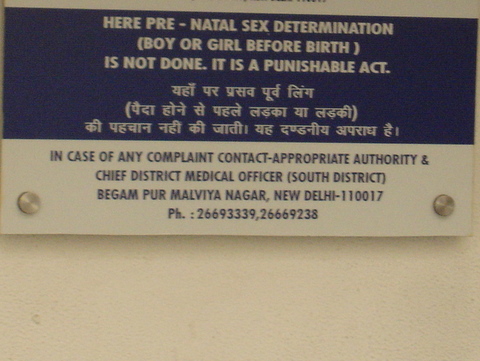
No choice--in terms of knowing that is.
Well, no legal choice. As the above discussion should illustrate, plenty of people choose to pursue illegal means of sex determination through bribing technicians or traveling to countries where it remains legal. But laws are there for a reason.
Where do children and family fit in contemporary academia?
This blog explores the tradeoffs and triumphs of juggling family life
with academics.
Saturday, August 13, 2011
Friday, March 25, 2011
Negotiating the intersections of pre-natal health and medical cultures
Staying healthy while pregnant can be quite challenging, and it's often also an exercise in the cultural relativity of medical information. As a medical anthropologist, I've always been interested in the similarities and differences in societies' healing and health maintenance practices. India is a particularly interesting place to explore these issues (and yes, I am biased), in part because of its well-developed traditions of concurrent and complementary medicine. Most people I know here rely on at least two of the following types of providers: allopathic physicians, Ayurvedic doctors, homeopaths, practitioners of Unani medicine, or providers of other therapies such as yogic breathing, reiki, and acupuncture.
Recently, a persistent chest infection and some general GI problems convinced me to consult two friends who serve as lay-health advisers, and eventually, three allopathic doctors. From the two friends, I received a bag filled with various Ayurvedic tonics. From the medical doctors, I was given a bevy of prescriptions for complex mixtures of antibiotics and palliatives (symptom-relieving treatments and medicines).

Life in Delhi presents various health concerns, ranging from black snot to persistent Delhi-belly. It also offers a much wider variety of treatment options than one finds in the U.S.
Figuring out what to take was really complicated. We couldn't find reputable information on the safety of the Ayurvedic tonics during pregnancy (i.e. from a source other than the online store that was selling them), but our friends swore that they were much safer than any antibiotic I could take. When I checked the safety of the allopathic drugs perscribed by the physicians, I found that several of them were strongly contraindicated during pregnancy because in animals they were associated with birth defects (this is category C, for those of you who are familiar with drug categorizations and pregnancy). The prescription in question came from our family physician here in metropolitan Delhi, who's been seeing patients for 40 years. This woman knows what she's doing. And the friends I consulted about the Ayurvedic treatments are former study abroad program leaders, who've been taking care of sick Americans in India for decades.
For us, this brings up a variety of questions related to epistemology and objectivity. At the most basic: how does one know what is "safe," and conversely what is not safe? Who does one trust when it comes to medical knowledge--particularly with sensitive conditions like pregnancy and pre-natal health? What makes us invest trust in one kind of practitioner or treatment over another?
Let's return to the Ayurvedic treatments, for example. They've been used for thousands of years here in India, and chemical analyses of many common ingredients in Ayurvedic medicines have demonstrated their beneficiality. However, very few studies have been done on Ayurvedic drugs and pregnancy. Without research specifically on pregnancy and Ayurveda, how can their safety be verified? Then again, is it even useful to apply a positivistic, biomedical definition of "drug safety" (usually established by a clinical trial or a retrospective cohort study) to a non-biomedical system?
According to our pregnancy books, the best policy when one is unsure about a treatment is not to take it. But I was really sick, and I had to do something. At some point, as with all medical interventions during pregnancy, it came down to the bottom line: which is more dangerous for me and the fetus, an ongoing health problem or the potential side effects of the treatment? In the end, I went with the familiar. After having Dave check the safety of each ingredient online, I took the antibiotics, the painkillers, the decongestants, and the cough syrup. We gave the Ayurvedic medicines away to Indian friends.
Recently, a persistent chest infection and some general GI problems convinced me to consult two friends who serve as lay-health advisers, and eventually, three allopathic doctors. From the two friends, I received a bag filled with various Ayurvedic tonics. From the medical doctors, I was given a bevy of prescriptions for complex mixtures of antibiotics and palliatives (symptom-relieving treatments and medicines).
Life in Delhi presents various health concerns, ranging from black snot to persistent Delhi-belly. It also offers a much wider variety of treatment options than one finds in the U.S.
Figuring out what to take was really complicated. We couldn't find reputable information on the safety of the Ayurvedic tonics during pregnancy (i.e. from a source other than the online store that was selling them), but our friends swore that they were much safer than any antibiotic I could take. When I checked the safety of the allopathic drugs perscribed by the physicians, I found that several of them were strongly contraindicated during pregnancy because in animals they were associated with birth defects (this is category C, for those of you who are familiar with drug categorizations and pregnancy). The prescription in question came from our family physician here in metropolitan Delhi, who's been seeing patients for 40 years. This woman knows what she's doing. And the friends I consulted about the Ayurvedic treatments are former study abroad program leaders, who've been taking care of sick Americans in India for decades.
For us, this brings up a variety of questions related to epistemology and objectivity. At the most basic: how does one know what is "safe," and conversely what is not safe? Who does one trust when it comes to medical knowledge--particularly with sensitive conditions like pregnancy and pre-natal health? What makes us invest trust in one kind of practitioner or treatment over another?
Let's return to the Ayurvedic treatments, for example. They've been used for thousands of years here in India, and chemical analyses of many common ingredients in Ayurvedic medicines have demonstrated their beneficiality. However, very few studies have been done on Ayurvedic drugs and pregnancy. Without research specifically on pregnancy and Ayurveda, how can their safety be verified? Then again, is it even useful to apply a positivistic, biomedical definition of "drug safety" (usually established by a clinical trial or a retrospective cohort study) to a non-biomedical system?
According to our pregnancy books, the best policy when one is unsure about a treatment is not to take it. But I was really sick, and I had to do something. At some point, as with all medical interventions during pregnancy, it came down to the bottom line: which is more dangerous for me and the fetus, an ongoing health problem or the potential side effects of the treatment? In the end, I went with the familiar. After having Dave check the safety of each ingredient online, I took the antibiotics, the painkillers, the decongestants, and the cough syrup. We gave the Ayurvedic medicines away to Indian friends.
Sunday, February 27, 2011
Taking the Plunge
The decision to have a child (or children), while different for everyone, is always a personal one. How does such a fundamentally personal choice fit in with the academic professions? Although it's different for everyone, we believe there are some common concerns shared by many folks considering parenthood: Are we ready? Is this a "good" time? Would there be a "better" time? Do we have the resources (financial, social, time-wise)?...The list goes on. We set up this blog because we know we're not the first ones to ask these questions; many of our friends and colleagues are dealing with similar issues. We're hoping that this blog will be a resource, and perhaps even a source of social support, for people going through these tough decisions.
For us, two healthy, young-ish doctoral students with supportive families, our primary concern revolved around timing. In short: was this a "good" time to have a baby? Jo was just about to begin a year of fieldwork in India after which we would be living in the Amazon for another year for Dave's fieldwork. Would there be a "better" time...perhaps one in which our first child would not be born in a foreign country, would not live the first year of its life in an Amazonian agrarian settlement, far away from its grandparents and other resources? Would our lives "calm down" after field work? Would dissertation writing, applying for jobs, or tenure track positions provide any respite? After a lot of hemming and hawing, we started to think that perhaps not. While life as an academic certainly has its perks, neither of us saw a stress-free, deadline-free point on the horizon.
With this realization, we began to wonder: Was this, perhaps, the "perfect" time, one in which we would be more "around" (i.e. not in an office or on a campus) and would be able to be an all-day part of our baby's life? Would living the first two years in India and Brazil imbue our baby with appreciation for cultural diversity, tolerance of adversity, patience, or perhaps lead to the easier acquisition of a second or third language?
As we spent three months awaiting our research visas to India, living in limbo, we pondered these questions incessantly. Our various graduate-school friends with children provided their insights and shared their experiences. But again, everyone's situation is different, and the decision was squarely ours. Deciding that "no time is a good time", that starting life with feet in diverse cultures couldn't be a bad thing, and that remaining committed to the challenge of integrating family life with that of academics...we took the plunge.
For us, two healthy, young-ish doctoral students with supportive families, our primary concern revolved around timing. In short: was this a "good" time to have a baby? Jo was just about to begin a year of fieldwork in India after which we would be living in the Amazon for another year for Dave's fieldwork. Would there be a "better" time...perhaps one in which our first child would not be born in a foreign country, would not live the first year of its life in an Amazonian agrarian settlement, far away from its grandparents and other resources? Would our lives "calm down" after field work? Would dissertation writing, applying for jobs, or tenure track positions provide any respite? After a lot of hemming and hawing, we started to think that perhaps not. While life as an academic certainly has its perks, neither of us saw a stress-free, deadline-free point on the horizon.
With this realization, we began to wonder: Was this, perhaps, the "perfect" time, one in which we would be more "around" (i.e. not in an office or on a campus) and would be able to be an all-day part of our baby's life? Would living the first two years in India and Brazil imbue our baby with appreciation for cultural diversity, tolerance of adversity, patience, or perhaps lead to the easier acquisition of a second or third language?
As we spent three months awaiting our research visas to India, living in limbo, we pondered these questions incessantly. Our various graduate-school friends with children provided their insights and shared their experiences. But again, everyone's situation is different, and the decision was squarely ours. Deciding that "no time is a good time", that starting life with feet in diverse cultures couldn't be a bad thing, and that remaining committed to the challenge of integrating family life with that of academics...we took the plunge.
Subscribe to:
Posts (Atom)